
Review the portfolio before the next slate
A betting portfolio review is most useful before emotion from the next game takes over. The goal is not to predict the next bet. The goal is to understand whether the record is still following the plan.
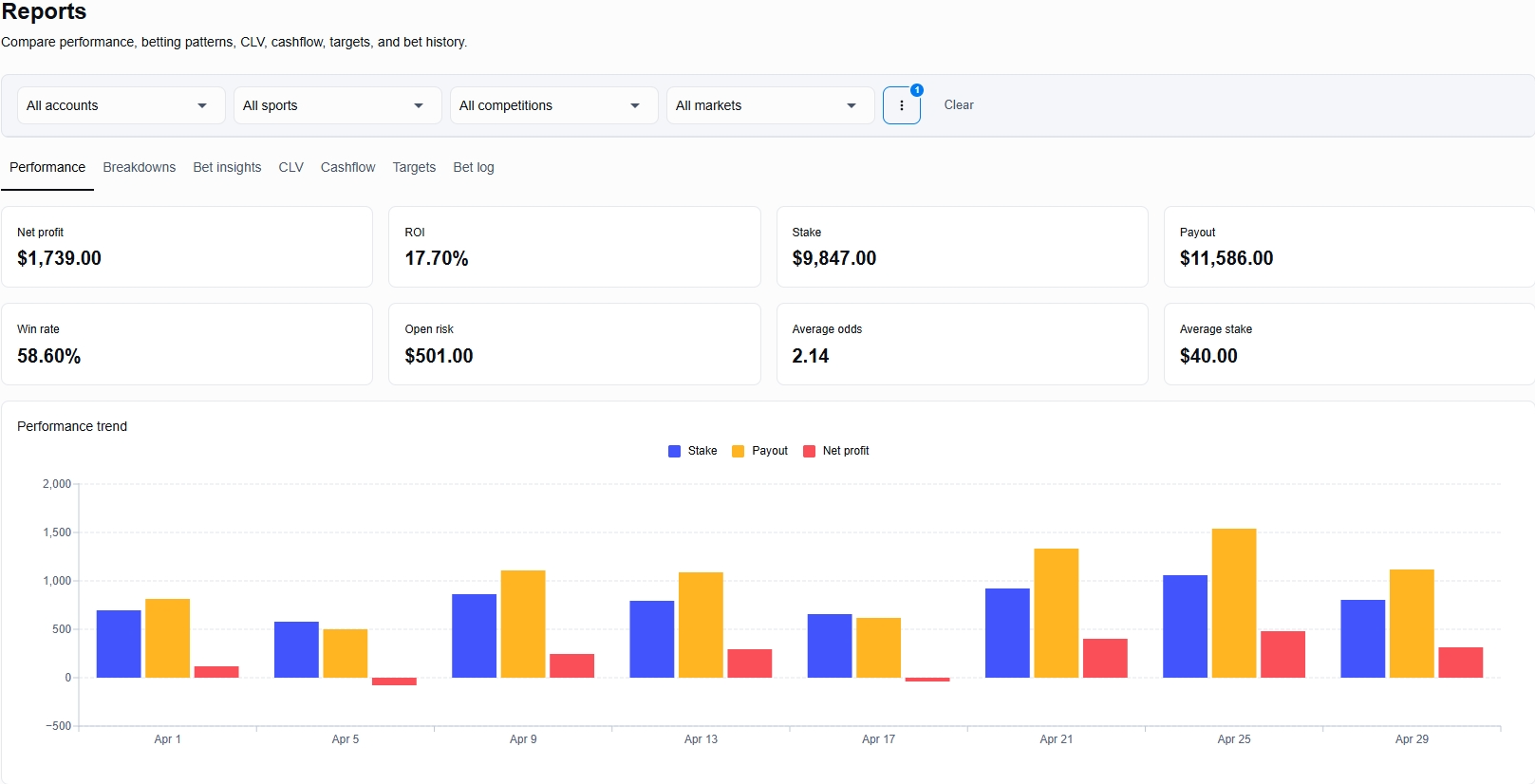
Betfolyo supports that review with the dashboard, book accounts, reports, calendar, goals, Smart Stake, and AI Coach. You can use the same routine even if you are still tracking manually.
Step 1: Check bankroll movement
Start with the money record:
- Total bankroll
- Balance by sportsbook account
- Deposits
- Withdrawals
- Bonuses and adjustments
- Open risk
- Settled profit and loss
This separates performance from movement. If the bankroll increased because of a deposit, that is different from profit. If a book balance fell because of a withdrawal, that is different from a losing week.
The bankroll tracker page explains this workflow in the product.
Step 2: Review ROI by question
ROI is better when it answers a specific question. Instead of asking whether the whole record is good or bad, review slices that could change behavior:
- ROI by sport or market
- ROI by sportsbook account
- ROI by tag or strategy
- ROI by odds range
- ROI by week or month
- ROI beside stake size
Use the ROI tracker to keep return tied to stake, account, market, and time period.
Step 3: Look at CLV without overreacting
CLV can help review whether prices moved toward or away from the bet you accepted. It does not guarantee the result.
Useful questions:
- Did positive CLV bets show a better trend over a larger sample?
- Which markets produced the best or worst CLV?
- Are negative CLV bets concentrated in one sport, tag, or account?
- Did bet timing affect price movement?
Betfolyo’s CLV tracker keeps this context beside the betting record.
Step 4: Check stake discipline
Stake size is where discipline becomes visible. Review whether stakes followed the plan or reacted to recent results.
Ask:
- Did stake size increase after losses?
- Did stake size increase after wins?
- Are a few bets carrying too much risk?
- Is open risk reasonable compared with bankroll?
- Did Smart Stake context match the final stake?
If the answer is uncomfortable, the review is doing its job.
Step 5: Write one action for next week
End with one practical adjustment, not ten. Examples:
- Keep max stake at the planned unit size.
- Pause one market until the sample is reviewed.
- Add missing CLV context before settlement.
- Stop mixing deposits with profit.
- Review only settled bets before judging ROI.
The record should make behavior easier to see. It should not create pressure to chase.
A connected review in the current workspace
Start with the Research topics behind your selections. In Bets, use a saved filter to separate settled performance from pending exposure, then inspect quality scores and any stake-discipline warnings. Compare Goals & Challenges with their target pace and review every ladder attempt, including losses.
Finish in Reports → Insights and Research: look at drawdown, cash-out impact, prediction calibration and topic performance. Keep the same date range and account scope when comparing results. The read-only Demo Portfolio provides a populated example after sign-in.