
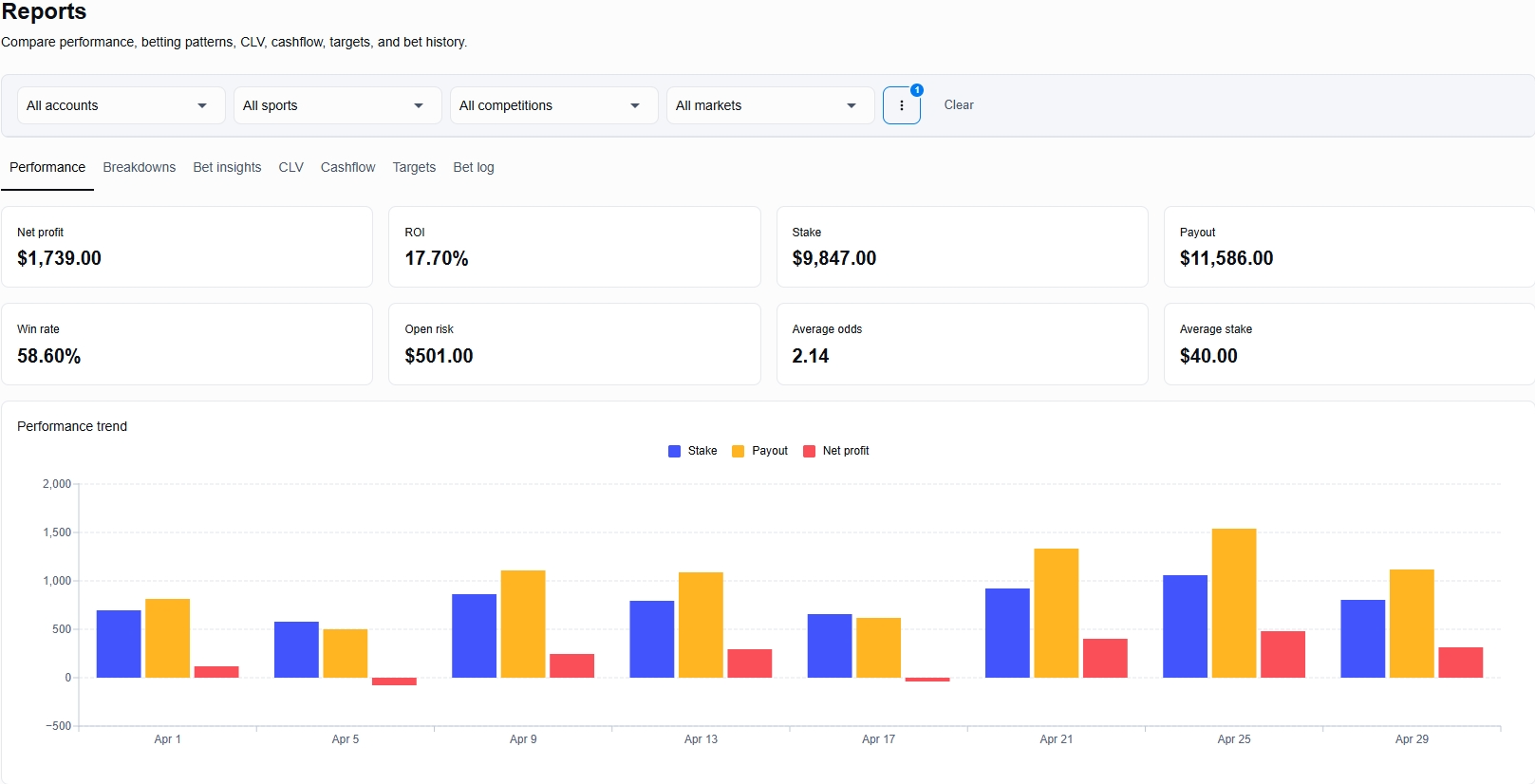
Betting ROI is profit divided by stake
Return on investment, or ROI, is one of the simplest ways to review a betting record. In sports betting, ROI usually means settled profit divided by total settled stake.
If you staked 1,000 and ended with 80 profit, the ROI is 8%. If you staked 1,000 and lost 60, the ROI is -6%.
That number is useful because it adjusts for volume. A bettor who made 200 profit from 10,000 staked has a very different record than a bettor who made 200 profit from 1,000 staked.
What makes ROI easy to misread
ROI looks clean, but the context matters. A small sample can swing wildly. One long-odds win can make a weak record look strong. A few large stakes can dominate a month. Pushes, voids, cashouts, free bets, odds boosts, and bonuses can also distort the picture if they are not handled consistently.
That is why ROI should not be reviewed as one lonely number. It is more useful when grouped by the way you actually bet:
- Sport and competition
- Market type
- Book account
- Tag or strategy
- Tipster or source
- Bet timing
- Odds range
- Calendar period
Betfolyo reports are built around that kind of review. The goal is not to make ROI look better. The goal is to make the record easier to inspect.
What to record for clean ROI
A clean ROI workflow starts before the report. Every bet should include enough detail to explain what happened later.
Track:
- Stake
- Odds
- Status and settlement result
- Profit, loss, payout, or return
- Book account
- Sport, competition, market, and selection
- Tags for strategy or intent
- CLV context when available
- Notes for unusual settlement rules
The sportsbook ticket usually covers some of this, but it rarely gives you the full portfolio view across accounts. Betfolyo keeps bet records, tags, sportsbook balances, and reports together so ROI can be reviewed beside bankroll movement. The ROI tracker page shows the product workflow, and the pricing page shows the Free and Pro tracking options.
Review ROI by question
The best ROI review starts with a question. Instead of asking “Am I good?” ask something more specific:
- Which markets carried profit this month?
- Did volume increase while ROI fell?
- Did one sportsbook have better or worse results?
- Did high-confidence tags perform differently?
- Did ROI change after stake sizes increased?
- Did CLV-positive bets show a better trend than the rest?
Those questions turn ROI from a vanity number into a feedback loop.
For a broader tracking workflow, read why track bets outside your sportsbook . For pricing movement, read what is CLV in sports betting .
Keep ROI honest
ROI does not predict the next bet. It explains a past record. A positive ROI can disappear, and a negative ROI can improve only if behavior changes and the sample grows.
Use Betfolyo to keep ROI organized, compare it with the rest of the portfolio, and review betting performance without turning one number into a promise.
Review more than a single return
In Pro Reports, compare ROI with drawdown, profit concentration, flat-stake yield and performance without the largest winning bet. Review cash-out impact separately. Prediction calibration evaluates your saved win estimates against settled outcomes; it does not forecast the next bet.
Use the Research report to compare research tags and saved filters to keep account, date and bet scope consistent. Low-sample labels help keep small groups in perspective.